
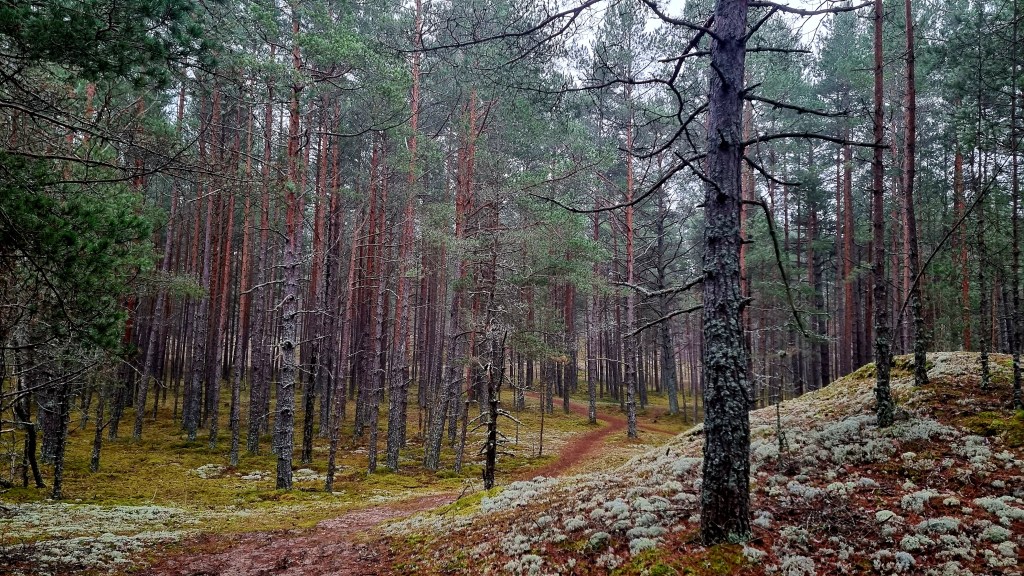
While it is dark and damp outside,
shadows have filled every empty corner, peering out from the eaves at night, frightening those who cross their path.
The shadow consists of everything that has not yet reached conscious awareness—on an individual, cultural, and collective level. It can be compared to an uncharted area on a map, where territories remain blank due to a lack of knowledge.
The Latvian proverb, “One sees the speck in another’s eye but not the log in their own,” perfectly explains the nature of the shadow.
I believe there is no aspect of a person’s personality more significant than their shadow. In fact, it is the most essential element in the journey of individuation, personality development, maturity, and self-discovery.
The shadow consists of everything we do not know about ourselves, everything we refuse to associate with ourselves—yet unconsciously project onto others: enemies, friends, partners, and even our children.
Carl Jung famously said:
“Until you make the unconscious conscious, it will direct your life, and you will call it fate.”
This quote perfectly illustrates the power of the shadow—for one cannot escape fate.
It is the classic story of stepping on the same rake over and over again—
not realizing how deeply hidden decisions and subconscious drives shape our actions and the trajectory of our lives.
Sometimes, we move toward a personal or collective abyss—blindly walking off the edge of a cliff.
Only years later do we look back and realize the destructive consequences—not just for ourselves but also for society, the nation, and even nature.
Why Is It So Difficult to See Our Own Shadow?
1️⃣ It is painful and terrifying
The shadow hides within it the most destructive and self-destructive aspects of a person.
The weaker the ego, the greater the fear of the shadow—and the stronger the denial of its existence.
💬 The more I try to suppress my anger, the more I try to be ‘good’—but without actually resolving conflicts, the bigger my shadow grows.
By ignoring it, I feed it—and one day, it overpowers the ego.
At that moment, a person might:
- Explode in hysteria
- Throw objects in a rage
- Get drunk or start a fight
- Engage in reckless, impulsive behavior
- Drive dangerously fast
- Cheat on their partner
- Do something that will have serious consequences
At best? Damaged relationships.
At worst? A situation so destructive that nothing can be undone.
2️⃣ It threatens our self-image
Our ego is built upon a value system—a structure that separates “good” from “bad.”
In order to maintain self-worth, we must believe that we are “good people” who do “good things.”
To acknowledge our own darkness means to face:
⚠️ Inner conflict
⚠️ Disappointment in ourselves
⚠️ Fear and doubt
For many, this is unbearable.
So instead, they suppress, deny, and project their darkness onto others—
believing that “evil” only exists outside of them.
How to Recognize and Integrate Your Own Shadow
🔎 One of the simplest methods?
Flip every assumption you make about others back onto yourself.
Every judgment, every “truth” about others—
is actually a reflection of yourself.
For example:
📌 If I say, “I know for a fact that no one in this room has ever struggled with this issue!”
➡️ I am actually talking about myself—because in reality, I have no way of knowing what anyone else has experienced.
📌 If I claim, “People like that are always selfish!”
➡️ That belief says more about me than about them.
📌 If I say, “Everyone does this!”
➡️ That reveals my own worldview, not an objective truth.
💡 What irritates us most in others is often a reflection of something we refuse to acknowledge in ourselves.
💡 The behaviors we mock, criticize, or judge in others are often behaviors we have exhibited ourselves.
The Shadow in Culture and Society
One of the most dangerous aspects of the collective shadow is denial.
🚪 “There is no problem here.”
🚪 “Everything is fine, don’t overthink it.”
🚪 “This is just how things are.”
Why confront painful truths when it is easier to ignore them?
🗣️ “Thieves steal, murderers kill, prostitutes work the streets. That’s just life.”
🗣️ “It’s not my problem. Let someone else deal with it.”
🗣️ “They made their choices. They deserve whatever happens.”
This mindset stems from the projection of collective guilt and responsibility onto “the bad part of society.”
💡 Every culture has specific keywords that reveal its collective shadow.
For example:
If a marginalized group is repeatedly described as “immoral,” then morality itself has become a projection of the shadow.
Similarly, in debates about migration or crime, the rhetoric often reveals deeply rooted fears and prejudices.
💬 When someone says, “If a white man rapes a woman, at least it’s not as bad as if it were an immigrant”—that is an explicit projection of the shadow.
The Shadow in Professional Fields
Even among professionals, the shadow manifests in dangerous ways.
For example:
A person in a helping profession—a therapist, doctor, teacher—who has suffered deep trauma but has never processed it.
🔹 They know the trauma is there.
🔹 But they have never fully confronted or healed from it.
What happens?
They disassociate from the pain and convince themselves they are fine.
🚨 And because they cannot face their own trauma, they also fail to recognize and prevent trauma in others.
Their ego becomes trapped in a psychological vice grip, much like a python constricting its prey.
Even though they are highly trained professionals, their own unprocessed pain controls their actions.
In extreme cases, this leads to the perpetuation of trauma.
A Tragic Example of the Shadow’s Power
⚠️ A woman who was sexually abused by her father as a child.
⚠️ As an adult, she sends her own daughters to spend summers with their grandfather.
⚠️ The abuse continues for another generation.
When the truth finally comes out, she excuses her decision with:
- “I never thought he would do it again.”
- “I don’t know why I did that.”
- “I guess I just wanted to believe he had changed.”
💬 “It happened to me, and I turned out fine.”
💬 “She’ll get over it, just like I did.”
💬 “It’s not my responsibility.”
This is how trauma is inherited—one generation after another.
The shadow ensures that history repeats itself.
Final Thoughts
☀️ The shadow is not just a concept—it is a force that shapes our lives, decisions, and relationships.
☀️ Until we confront it, it will continue to control us from the darkness.
☀️ But the moment we recognize it, we gain the power to change.
💡 The question is—are we willing to look into the mirror?
 Psychotherapy
Leave a comment